
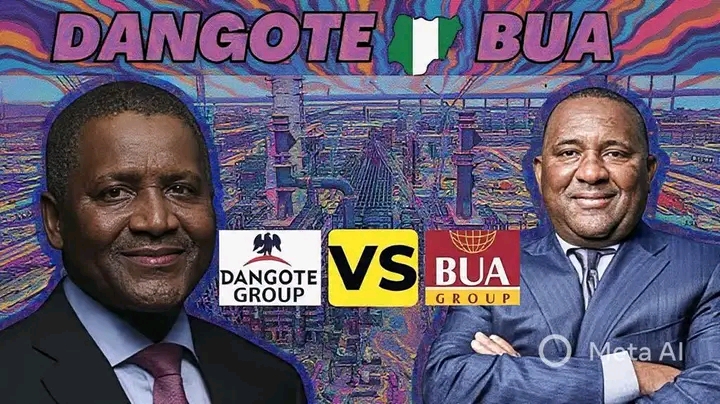
Nigeria’s industrial landscape is being shaped by two powerful forces — Aliko Dangote and Abdul Samad Rabiu.
Through their companies, Dangote Group and BUA Group, these billionaires are driving competition, innovation, and growth across key sectors of the Nigerian economy.
But this is more than just a rivalry — it’s a transformation of how business is done in Nigeria.
👉 Kana son ganin cikakken bayani?
🔥 Danna nan don cigaba da karantawa—
1. Cement Industry: The Foundation of the Rivalry
The battle between these two giants became most visible in the cement industry.
Dangote Cement has long been the market leader, with a strong nationwide presence.
BUA Cement entered the market aggressively, expanding production and offering competitive pricing.
This competition has led to:
Increased supply of cement
Competitive pricing in some regions
Faster infrastructure development
For consumers and developers, this rivalry has created more options and, in some cases, better prices.
—
2. Sugar and Food Production: Expanding the Battlefield
The competition didn’t stop at cement.
Both groups have invested heavily in Nigeria’s food sector:
Dangote Sugar Refinery
BUA Foods
From sugar to flour and other food products, both companies are fighting to dominate Nigeria’s growing consumer market.
This has resulted in:
Expansion of local production
Reduced reliance on imports
More job opportunities
—
3. The Refinery Revolution
One of the biggest game-changers in recent years is the launch of the Dangote Refinery — a multi-billion-dollar project aimed at transforming Nigeria’s oil and gas sector.
This refinery is expected to:
Reduce fuel imports
Stabilize fuel supply
Impact fuel pricing across the country
While BUA is not directly competing in refining at this scale, its presence in other industrial sectors keeps the overall competition intense and balanced.
—
4. Competition That Benefits Nigeria
Unlike unhealthy rivalries, this competition has brought real benefits to the country:
More industrial investments
Job creation for thousands of Nigerians
Improved product availability
Stronger private sector growth
Both companies are pushing each other to do better — and Nigeria is gaining from it.
—
5. Different Business Styles, Same Big Vision
While both leaders are successful, their approaches differ:
Aliko Dangote focuses on large-scale, capital-intensive projects with long-term dominance in mind.
Abdul Samad Rabiu is known for strategic expansion, efficiency, and competitive pricing.
Despite their differences, both share a common goal:
building industries that can compete globally.
—
6. What This Means for Entrepreneurs
This rivalry offers valuable lessons:
Competition can drive growth
Innovation comes from pressure
Big vision leads to big impact
For small and medium businesses, it shows that: success is not just about starting — it’s about scaling, adapting, and competing smartly.
—
Final Thoughts
The story of Dangote vs BUA is not just about two billionaires —
it’s about the evolution of Nigerian business.
Their competition is:
Building industries
Creating opportunities
Shaping the future
As Nigeria continues to grow, one thing is clear:
this rivalry is far from over — and the best is yet to come.
—